
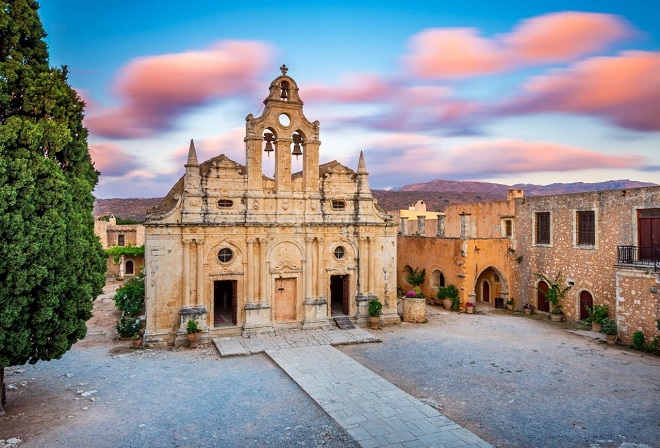
Arkadi Monastery: How to visit Crete’s symbol of freedom & what to see
Last updated: November 28, 2025
Arkadi Monastery rests peacefully among the olive-dotted hills south of Rethymno, surrounded by sweeping mountain views and timeless Cretan landscapes. While its 16th-century Venetian architecture is reason enough to visit, Arkadi holds a deeper meaning, since it's one of Crete’s most sacred and symbolic landmarks.
Famed for its pivotal role in the 1866 Cretan resistance against Ottoman rule, the monastery is a powerful symbol of sacrifice, faith, and national pride. The name "Arkadi" is believed to derive either from the ancient Arcadians of the Peloponnese or a 5th-century monk named Arkadios - both origins hinting at a legacy of endurance and spiritual strength.
Getting there is part of the charm. The road winds through picturesque villages, roadside cafés, and olive groves that invite you to slow down and take it all in. If you're bound to explore the beauty of Central Crete by car, Arkadi is a must. It’s easy to reach, rewarding to visit, and best experienced at your own pace. Renting a car in Crete gives you the flexibility to stop where you want, take the scenic route, and make the most of your day!
Before you go: best time to visit, dress code & etiquette
Best time to visit
- Early (around 08:00–10:00) or late afternoon (after ~16:00) for softer light and fewer tour buses.
- Shoulder seasons (Apr–Jun, Sep–Oct) balance weather and crowds; midsummer midday can be hot and busy.
- Check seasonal hours; last entry is often 30–60 minutes before closing. See the Tickets & Amenities section for details.
- Wear comfy shoes; paths can be uneven. Consider combining with Ancient Eleutherna or Margarites the same day.
Dress code & etiquette
- Modest clothing: cover shoulders and knees; bring a light shawl/sarong if needed.
- Inside churches: remove hats, keep voices low; avoid flash or posed photos during services.
- Respect the site: no smoking or drones within the precinct; don’t climb walls or restricted areas.
- Photography: ask before photographing clergy or worshippers; follow posted signs in the museum.
Why Arkadi Monastery Is a Must-See Landmark
If you’re planning a road trip across Crete, few destinations combine history, emotion, architecture and accessibility like Arkadi Monastery does. Here’s why it deserves a place on every Crete itinerary, especially when you explore by car:
- A symbol of heroism and sacrifice: Arkadi isn’t just an ancient monastery; it’s a testament to the Cretan spirit. The events of 1866 transformed it from a spiritual refuge into a national emblem of resistance. Visiting Arkadi means standing where people bravely chose dignity and freedom over surrender.
- A living monument with history you can touch: From the twin‑bell façade to the stone walls, the refectory door scarred by bullets, and the silent powder‑magazine chamber, Arkadi’s architecture carries a story - vivid, tangible and moving.
- Reconnects you with Cretan culture and identity: Halfway between history and spirituality, Arkadi Monastery teaches lessons about faith, resilience and collective memory, making it a meaningful stop for anyone wanting more than just beaches and nightlife.
- Accessible via a scenic drive, perfect for road‑trip lovers: Located just about 23 km southeast of Rethymno, the journey to Arkadi winds through olive groves, mountain villages, and scenic overlooks, making it a perfect destination for road-trip lovers.
The History and Legacy of Arkadi Monastery
A visit to Arkadi isn’t complete without understanding the powerful story behind its peaceful walls. Let’s see a brief overview of Arkadi Monastery’s history and legacy:
From Byzantine Roots to Renaissance Glory
Though the current structure dates to the 16th century, Arkadi’s origins go back to the 12th century. Under Venetian rule, it became a respected center of learning, known for its Renaissance architecture, twin bell towers, and scriptorium.
Arkadi and the 1866 Cretan Revolt
In 1866, the monastery became a stronghold during Crete’s revolt against Ottoman rule. Nearly 1,000 Cretans sought refuge inside its walls. When the Ottomans laid siege, the monks and civilians refused to surrender.
The Holocaust of Arkadi
After two days of fighting, defenders chose a final act of resistance. Led by Abbot Gabriel and teacher Konstantinos Giaboudakis, they ignited the gunpowder storeroom sacrificing themselves and many invaders. The event shocked Europe and made Arkadi Monastery a global symbol of heroism.
Restoration and Memory of Arkadi
After the tragedy, Arkadi Monastery was carefully rebuilt. Visitors today can still see the bullet-scarred refectory door, the silent powder room, and a small ossuary that holds the remains of those who died preserving both the monastery’s beauty and its powerful legacy.
What is The Architecture of Arkadi Monastery like?
The architecture of Arkadi Monastery is a striking fusion of Venetian Renaissance elegance and functional fortification. Its symmetrical façade, Corinthian columns, and twin bell towers showcase the artistic influence of Italian design, while its stone cloisters and two-naved church (Katholikon) invite quiet reflection. Yet beyond the beauty lies resilience: thick defensive walls, narrow gates, and the haunting powder room speak to its role as both sanctuary and stronghold during Crete’s uprisings. From the bullet-scarred refectory to the peaceful central courtyard, every corner of Arkadi tells a story of faith, artistry, and unshakable resolve.
Getting to Arkadi Monastery
| From | Distance (km) | Typical Drive Time |
|---|---|---|
| Rethymno | ~23 km | 30–40 minutes |
| Chania / Chania Airport | ~85 km | ~1 hour 30 minutes |
| Heraklion / HER Airport | ~95 km | ~2 hours |
Times assume normal traffic and minimal stops.
Getting to Arkadi Monastery is part of the adventure and with the right route, it becomes one of the most memorable inland drives in Crete. Let’s break down the best ways to get there:
By Rental Car – Best Choice for Flexibility
Driving is the most flexible and rewarding way to reach Arkadi. The roads are well paved and signposted, and renting a car in Crete gives you total freedom to explore nearby villages or make spontaneous photo stops along the way. Before you set off, check out our Crete car rental deals to find the best option for your trip!
From Rethymno
Coming from Rethymno? The drive to Arkadi Monastery is short, scenic, and ideal for a relaxed half‑day trip. So go ahead and rent a car in Rethymno to get the most of your trip!
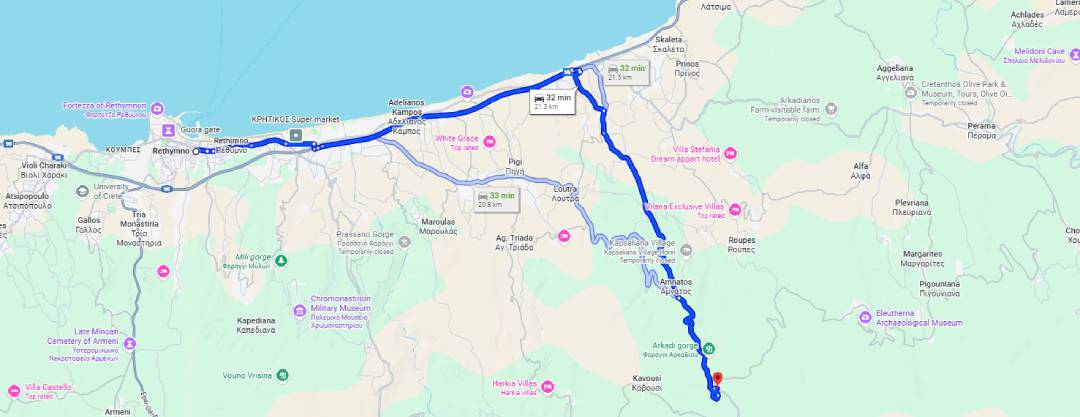
- Distance / Time: ~23 km, about 30–40 minutes.
- Route: Head southeast from Rethymno toward Amnatos or Kyrianna, following signs for Arkadi. The road is fully paved and gently climbs through olive groves and small villages, with a few easy pull‑offs for photos or a quick coffee stop.
From Chania/ Chania Airport
Driving from Chania or Chania Airport to Arkadi is a lovely mix of coastal highway and quiet inland countryside.
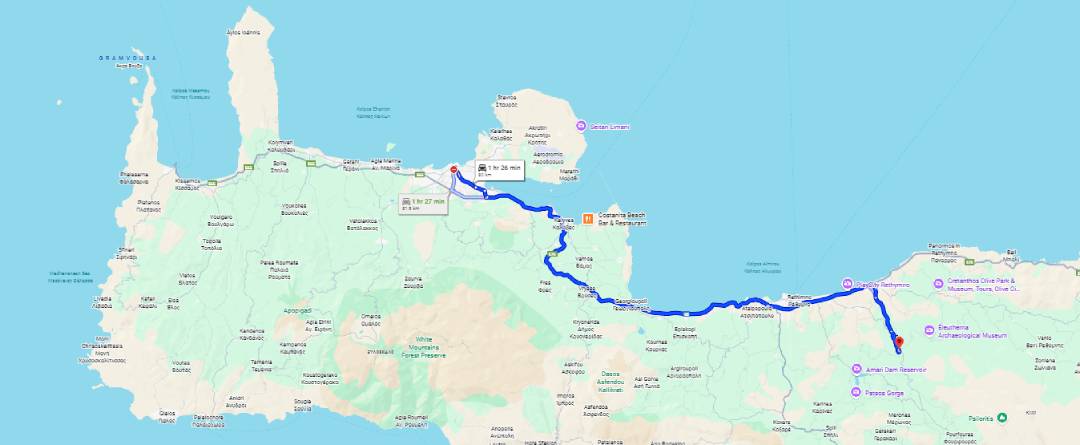
- Distance / Time: ~85 km, around 1 hour 30 minutes.
- Route: Take the E75 highway east toward Rethymno, then turn inland following Arkadi Monastery signs. Once you leave the coast, the landscape opens into rolling hills and traditional villages, perfect if you want a more “real Crete” road‑trip feel.
From Heraklion (HER Airport / city)
Coming from Heraklion or the Heraklion Airport? Arkadi makes a great cultural stop on a central Crete road trip.
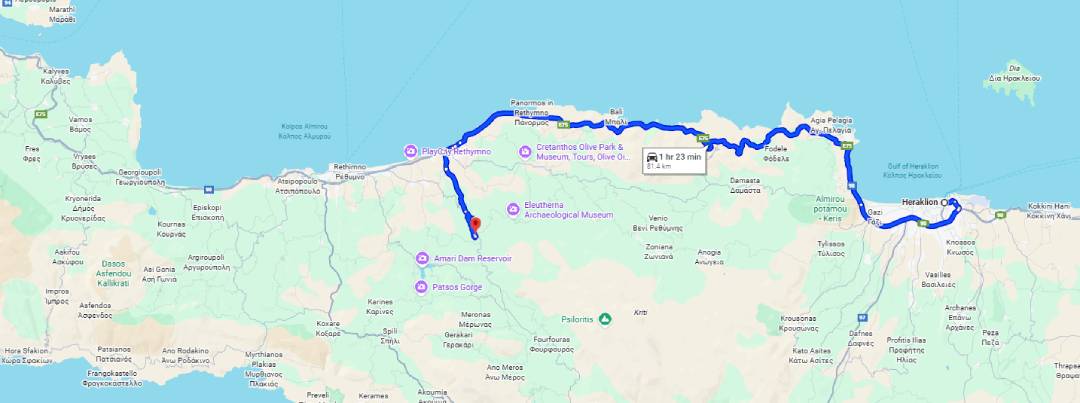
- Distance / Time: ~95 km, about 2 hours.
- Route: Drive west on the E75 toward Rethymno, then exit inland and follow signs for Arkadi. The highway stretch is smooth and fast, and the final inland section is peaceful and scenic.
To make the most of the drive, choose a car that matches your day, whether that’s a nimble compact for village roads or a roomier option for a full‑day loop. With CreteCars, you can pick what suits your route and travel style best. So, go ahead and explore our Fleet!
By Taxi
This is a convenient but more expensive option, with a one-way fare from Rethymno to Arkadi typically around €20–€30 depending on the season, time of day and exact pickup point. It’s ideal if you’re not comfortable driving but still want direct access.
By Bus
Public buses run from Rethymno to Arkadi during the high season. However, they are limited and not always aligned with visiting hours.
Parking, Tickets, and Visitor Amenities at Arkadi Monastery
Visiting Arkadi Monastery is a smooth and well-organized experience, whether you’re arriving in your own car or on a tour. While the site itself feels peaceful and remote, it offers the essential amenities and clear visitor information you’d expect from one of Crete’s most respected landmarks.
Opening Hours:
- Summer (April–October): 9:00 AM – 8:00 PM
- Winter (November–March): 9:00 AM – 4:00 PM
Entrance Fee:
- For adults: €3
- Children, students, and EU seniors may enter free or at a reduced rate (bring ID)
Tip: Aim to arrive earlier in the morning or later in the afternoon for fewer crowds and softer lighting.
Parking at Arkadi Monastery:
- A free parking lot is located just outside the main gate
- Spaces fill up quickly in high season (especially after 11:00 AM)
- The parking area is paved and easy to access by car or van
Visitor Amenities:
- Restrooms: Clean, modern, and free to use
- Gift Shop: Sells icons, religious books, and tasteful local souvenirs
- Cafés: Not on-site, but you’ll find excellent tavernas and coffee spots in nearby villages like Amnatos or Margarites
- Accessibility: Most main areas are accessible via wide paths, but some sections (like the refectory or ossuary) may have uneven stone surfaces or steps
What to See and Do at Arkadi Monastery
Whether you're visiting Arkadi Monastery for the history, the symbolism, or the photo opportunities, here are the highlights that make this sacred site worth exploring in depth:
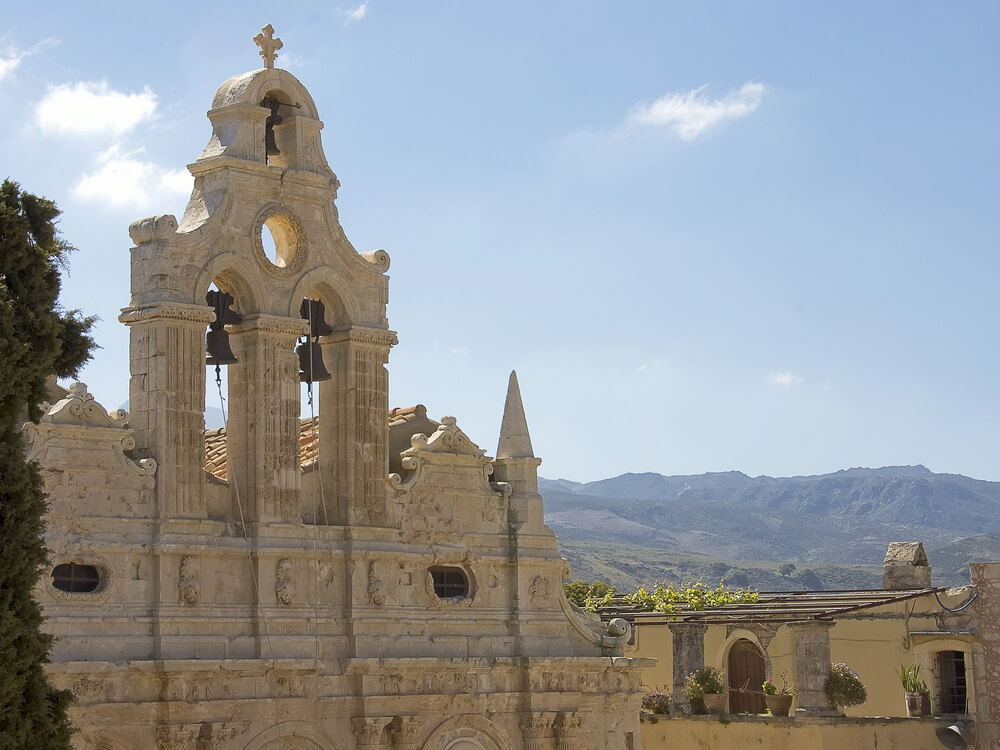
1. Step into the Main Courtyard and Gaze at the Bell Towers
Begin your visit in the serene central courtyard. Surrounded by monastery buildings and crowned by the twin bell towers, it’s one of the most photogenic spots, especially during golden hour.
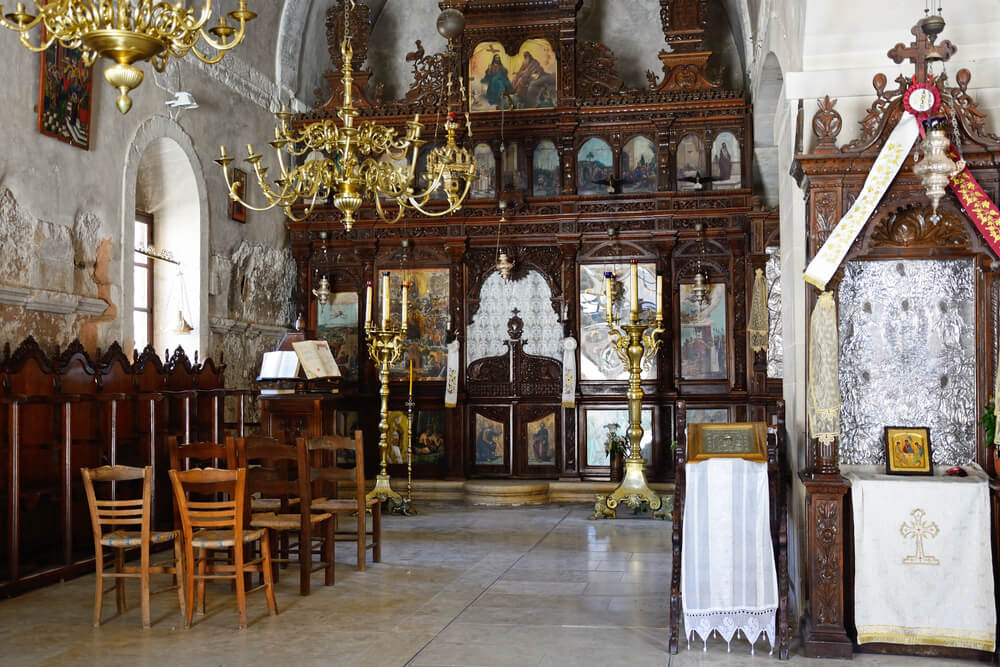
2. Enter the Katholikon (Main Church)
Built in 1587, this two-naved church is the spiritual core of the monastery. Inside Katholikon, you'll find sacred icons, finely carved stonework, and the peaceful ambiance of centuries-old devotion.
3. Explore the Refectory and Notice Its Bullet-Scarred Door
The Refectory was once the communal dining hall for monks, but during the 1866 siege, it became a shelter for the final defenders. The original door, still marked by Ottoman bullets, silently commemorates their last stand.
4. Visit the Powder Magazine and Reflect on the Resistance
This small, windowless room witnessed the monastery's most dramatic moment, when it was intentionally blown up by the defenders rather than fall into enemy hands. Today, it remains untouched and powerfully symbolic.
5. Pay Tribute at the Ossuary and Memorial Room
Just outside the main compound, the ossuary holds the bones of those who perished in the explosion. It's a somber but essential stop that honors their memory.
6. Browse the Museum and Discover Religious Artifacts
The monastery's museum is compact but rich in detail.
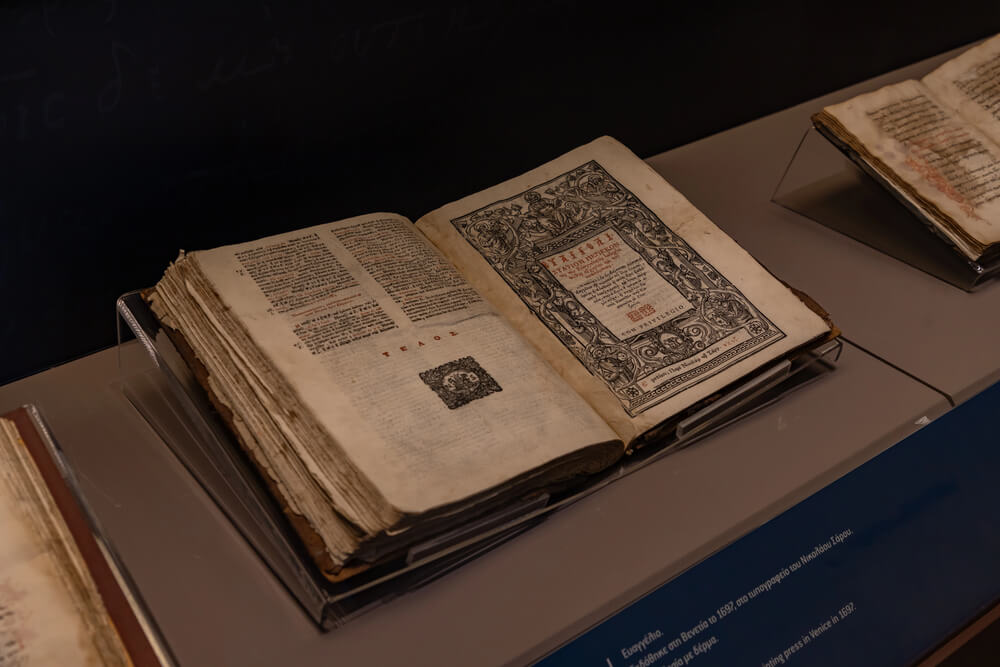
Highlights include:
- 18th-century manuscripts and liturgical books
- Post-Byzantine religious icons
- Weapons used during the 1866 revolt
- Personal effects from the defenders
7. Capture Photos from Scenic Viewpoints
Bring your camera! Arkadi Monastery is full of breathtaking perspectives:
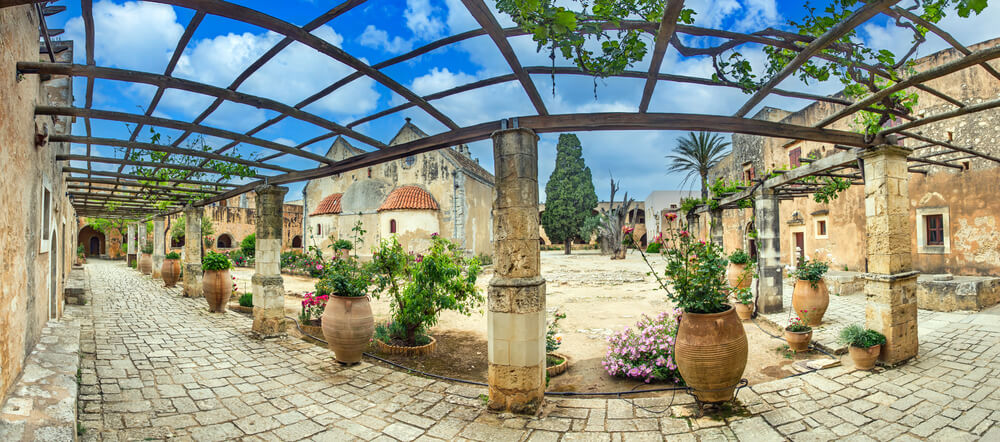
- Upper cloisters for wide-angle courtyard shots
- Outside the gates for sweeping valley views
- In front of the bell towers at sunrise or sunset
Plan Your Arkadi Monastery Visit with a Rental Car
From its inspiring story of heroism to its peaceful courtyards and panoramic views, Arkadi Monastery is one of the most powerful cultural landmarks in Crete. Whether you’re moved by history, curious about architecture, or simply seeking a scenic escape from the coast, Arkadi rewards you at every turn.
The best part? It’s easy to reach by car and even better when you take the road at your own pace. Renting a car in Crete lets you explore not just the monastery, but also the charming mountain villages, pottery workshops, and viewpoints scattered along the way.
That’s where CreteCars comes in. With a wide range of vehicles, flexible pick-up points, and friendly local service, CreteCars makes it simple to turn your trip to Arkadi into an unforgettable adventure across the heart of the island.
Frequently Asked Questions about Arkadi Monastery
Is there a dress code for visitors at Arkadi Monastery?
Yes. As Arkadi is an active Orthodox monastery, modest dress is required. Both men and women should cover their shoulders and knees. Scarves or wraps are usually provided at the entrance if needed, especially during high season.
Can I visit Arkadi Monastery on a day trip?
Absolutely. Arkadi is perfect for a half-day trip from Rethymno and easily pairs with other local highlights like the traditional pottery village of Margarites or the ancient ruins at Eleutherna. Traveling by car gives you the most flexibility.
How long should I plan to stay at Arkadi Monastery?
Plan to spend 1.5 to 2 hours exploring the monastery grounds, museum, memorials, and scenic viewpoints. History lovers, photographers, and those who like to read informational plaques may want a bit more time.
Are there guided tours on-site?
Yes. During the tourist season, local guides are often available at the entrance. For a more in-depth experience, consider joining a full-day cultural tour that includes Arkadi and other historical or natural sites in the region.
Is Arkadi accessible for those with limited mobility?
Partially. While the main courtyard and some areas are flat, several sections (like the powder room or museum) have uneven stones, steps, or narrow passages. Visitors with mobility issues should be prepared for limited access.
Which is better to visit? Arkadi Monastery or Preveli Monastery?
It depends on what kind of experience you're after. If you're interested in Crete's national history and heroic resistance against Ottoman rule, Arkadi Monastery is the better choice. It's emotionally powerful, compact, and rich in historical storytelling. On the other hand, if you're drawn to scenic views, coastal landscapes, and a more relaxed atmosphere, Preveli Monastery with its proximity to the famous beach and palm forest is ideal.
What’s the best time of day to visit Arkadi Monastery?
The best time to visit Arkadi Monastery is early in the morning, right after opening. You’ll avoid tour bus crowds and enjoy cooler weather for exploring and photography. Late afternoon is also peaceful, especially in summer, but avoid midday hours due to heat and potential congestion.
Is Arkadi Monastery open on public holidays?
Yes, Arkadi Monastery is generally open on most public holidays, though hours may be reduced or adjusted. It remains a functioning monastery, so special religious services might limit access to some areas. Always confirm opening times locally or online before planning a holiday visit.
Can I combine Arkadi with Margarites or Eleutherna in one day?
Absolutely! Arkadi, Margarites, and Eleutherna are close together and make a great day trip. You can start at Arkadi, explore pottery shops in Margarites, then visit the archaeological site or museum in Eleutherna. Renting a car makes the trip flexible and allows for spontaneous stops.